
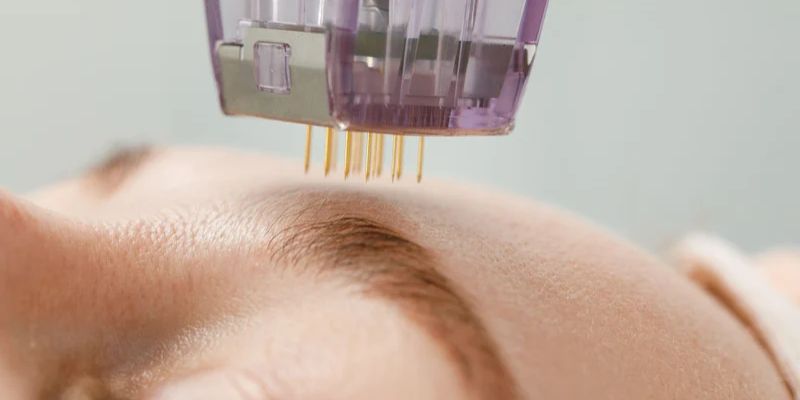
This guide explains how microneedling works, what results are realistic, what the process and recovery look like, and who should talk to a provider before booking. It is general information and not medical advice. A provider will assess your skin and tell you what is appropriate for you.
What is microneedling?
Microneedling, also called collagen induction therapy, uses a device with very fine needles that make controlled, tiny punctures in the surface of the skin. The skin responds to these micro-injuries by starting a repair process, which includes producing new collagen and elastin, the proteins that give skin structure and elasticity.
At Core Wellness, SkinPen microneedling is listed among our medical skin rejuvenation treatments, and a medical-grade skin treatment consultation is available to help you decide whether it fits.
What concerns can microneedling address?
Microneedling is commonly used for:
- Uneven skin texture and rough patches
- Fine lines and early signs of aging
- Acne scarring
- Enlarged-looking pores
- Dullness and uneven tone
- Some stretch marks and surface scars, depending on the case
It does not replace surgery, and it is not the right tool for every concern. Deeper wrinkles, significant skin laxity or certain pigmentation conditions may need different or additional treatments. A consultation helps match the treatment to the goal. Our posts on why collagen production declines with age and facial rejuvenation treatments provide more background on the biology behind these treatments.
What the treatment feels like
- Consultation and skin assessment. Your provider reviews your skin, history and goals, and checks for reasons to postpone treatment.
- Cleansing and numbing. The skin is cleansed, and a topical numbing product may be applied for comfort.
- Treatment. The device is passed over the skin in small sections. Many people describe a vibrating or scratching sensation, with some areas feeling more sensitive than others.
- Soothing products. A calming serum or other product is applied afterward.
Sessions usually take under an hour, depending on the area.
Downtime and recovery
Immediately after treatment, the skin is typically red, like a mild sunburn, and may feel warm, tight and slightly rough. Redness often settles over a few days, though it varies by person and treatment depth. Flaking and dryness can follow.
During the first days, the skin is more sensitive and more vulnerable to the sun. Following your provider’s aftercare instructions protects the results.
Aftercare basics
- Keep the skin clean and gently moisturized, using products your provider approves
- Avoid makeup for the period your provider advises
- Avoid direct sun and wear broad-spectrum sunscreen daily. This is especially important in Lubbock, where sun and wind are intense. Read how the West Texas climate affects your skin.
- Skip harsh actives, such as retinoids, exfoliating acids and scrubs, until your provider says they are safe to resume
- Avoid heavy sweating, saunas and swimming for the recommended period
- Do not pick or scratch flaking skin
When do results appear?
Microneedling is not instant. Skin often looks fresher and more radiant within days as redness fades. The deeper improvements, including better texture and firmness, develop over weeks to months, as new collagen forms. For that reason, results are best judged after a series of treatments, not after the first.
How many sessions do you need?
Most plans involve a series of treatments spaced several weeks apart, followed by occasional maintenance. The number depends on your skin concern, the severity and your skin’s response. Acne scarring, for example, often requires more sessions than general rejuvenation. Your provider can give you a realistic plan after an assessment.
Realistic expectations matter. Microneedling can improve the look of skin, but it does not erase every scar or wrinkle, and individual results vary.
Who should talk to a provider first, or wait?
Microneedling is not suitable for everyone. Talk to your provider if:
- You have active acne, cold sores, eczema, rosacea flares or skin infections in the area
- You are pregnant or breastfeeding
- You have a tendency to form keloid or raised scars
- You have a bleeding or clotting disorder or take blood thinners
- You have recently used isotretinoin or other strong acne medications
- You have recent sun exposure or a tan
- You have autoimmune conditions or a weakened immune system
This is not a full list. Share your complete medical history and medication list before treatment.
Microneedling vs other treatments
Facials: A professional facial cleanses, exfoliates and hydrates the surface. It is a great maintenance step, but it does not trigger the deeper repair process that microneedling does. See professional facials vs at-home skincare.
Chemical peels: Peels use acids to exfoliate the skin’s surface layers, which helps with tone and texture. Microneedling works by stimulating repair from within.
Laser treatments: Lasers use light energy to treat concerns such as pigmentation, texture or vascular issues. Some are more intensive and involve more downtime. Read about laser treatment for the face.
Injectables: Botox and fillers address facial movement and volume, a different category from skin quality. See Botox vs fillers.
Many people combine treatments over time. A provider can design a plan that makes sense for your goals and sequences treatments safely.
How to get the best results
- Start with a consultation and be honest about your goals, history and routine
- Prepare your skin by following pre-treatment instructions
- Protect your skin from the sun before and after
- Be consistent with a series, not a one-off
- Support your skin at home with gentle cleansing, moisturizer and sunscreen
- Ask what is realistic for your concern
FAQ
Does microneedling hurt?
Most people tolerate it well, particularly with numbing, though some areas feel more sensitive.
How long do microneedling results last?
It depends on your skin, age, sun exposure and habits. Many people maintain results with periodic treatments and good skincare.
Can I wear makeup after microneedling?
Usually not right away. Follow your provider’s timing.
Is microneedling safe for all skin tones?
It is often considered suitable for many skin tones, but your provider should assess you personally.
Can I combine microneedling with other treatments?
Often yes, with the right timing, guided by your provider.
Schedule a skin consultation in Lubbock
Core Wellness offers medical-grade skin treatment consultations to help you choose the right plan. Book online or contact us. Explore our memberships and packages and payment plans.